Development of International Cooperation: Karazin University Professor Took Part in Erasmus+ Programme in Austria
.jpg)
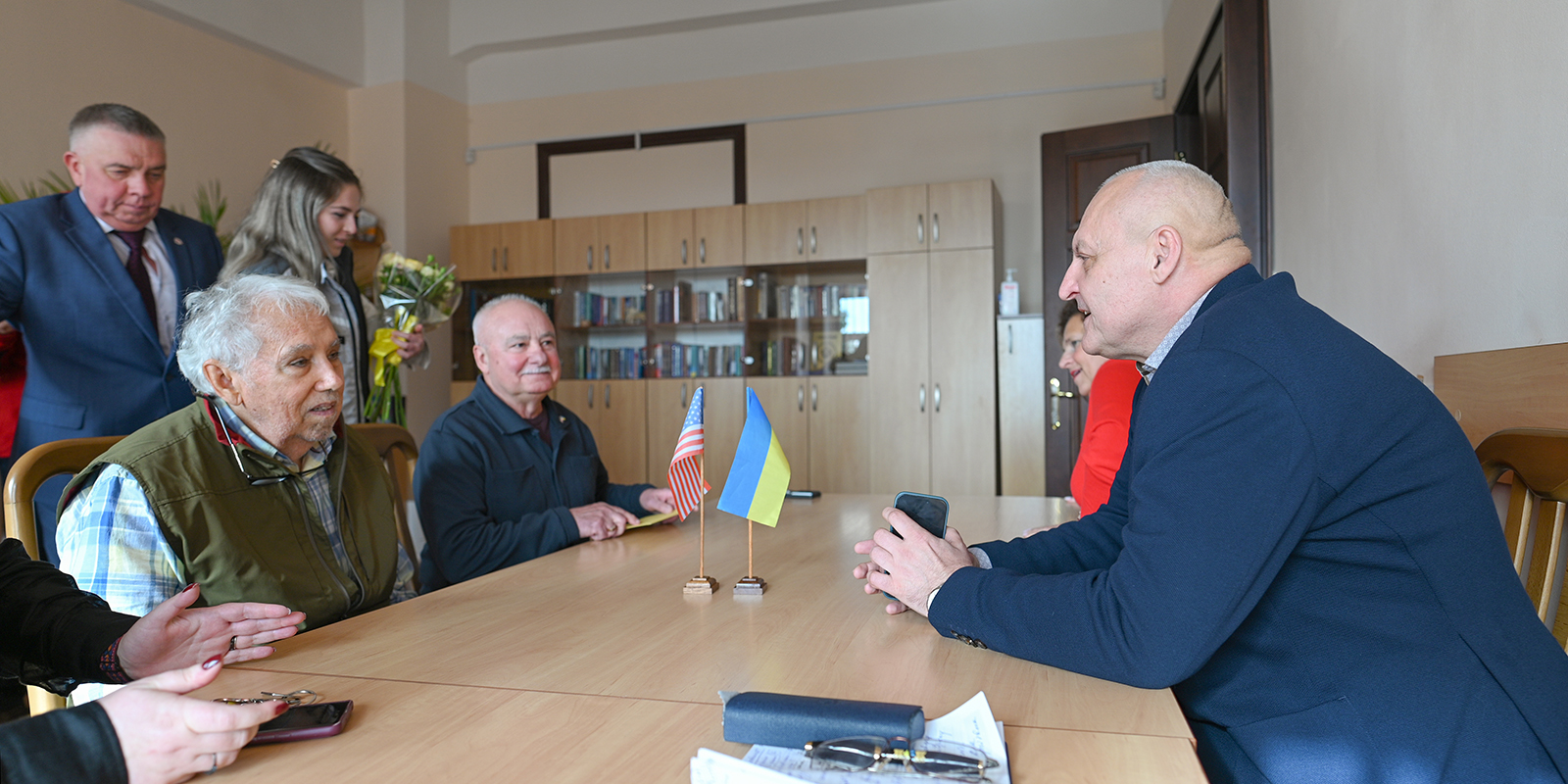
From April 14 to 18, 2026, Professor of the Department of Information Computer Technologies and Mathematics of the Education and Research Institute “Ukrainian Engineering and Pedagogical Academy” of Karazin University, Tetiana Bondarenko, took part in the academic mobility programme for teaching staff under the EU Erasmus+ Programme during the International Teaching Days IMC 2026, held at the University of Applied Sciences Krems (Austria).

Within the programme, the Karazin representative attended seminars, workshops, and lectures dedicated to the development of international cooperation between universities, the exchange of teaching experience, and the strengthening of academic ties in the European educational space.
Tetiana Bondarenko conducted a workshop on the topic “Gamification as an Effective Tool for Increasing Student Engagement in the Educational Process.” Participants included representatives of Artevelde University of Applied Sciences (Belgium), Linnaeus University (Sweden), Fortis University of Applied Sciences (Netherlands), Alfred Nobel University (Ukraine), HAN University of Applied Sciences (Netherlands), Haaga-Helia University of Applied Sciences (Finland), Breda University of Applied Sciences (Netherlands), and OST – Eastern Switzerland University of Applied Sciences (Switzerland).

During the workshop, gamification was considered as a modern pedagogical approach involving the use of game elements and mechanics in a non-game educational environment to increase students’ motivation, activity, and engagement. Theoretical foundations of gamification, its psychological and pedagogical prerequisites, and its didactic potential in the context of modern digital education were analyzed.
Special attention was given to the practical application of interactive tools and group work. In particular, Tetiana Bondarenko used the Mentimeter platform as a digital tool for active audience engagement. During the session, quizzes and word clouds were used in real time, enabling the rapid collection of participants’ opinions, stimulating discussion, and increasing engagement. This tool contributed to dynamic feedback between the lecturer and participants and made the learning process more interactive and effective.

Another element of the workshop was the use of the Wordwall maze game “The Life of Mozart,” which allowed participants to explore Wolfgang Amadeus Mozart’s biography in an interactive format. By completing the maze, participants answered questions and selected correct options, which improved knowledge retention, developed logical thinking, and increased learning motivation.
Another practical example was the game “International Teaching Week in Krems,” created on the Wayground platform. It was used as an interactive tool for simulating the learning experience during International Teaching Week Krems. Participants completed tasks related to intercultural communication, educational practices, and collaboration in an international academic environment. The game fostered critical thinking, teamwork, and deeper engagement with the context of academic mobility.
An important part of the workshop was group work, where participants were asked to design a game scenario titled “Green Mission: Save the Planet” using levels and provided materials. Each level represented a specific environmental theme—resources, waste, energy, and responsible consumption—and included different types of tasks such as quizzes, case studies, and mini-experiments. Items such as oranges, tea, and sweets were used as symbolic resources or rewards for completing tasks. Progressive difficulty, a points system, and teamwork ensured high engagement and contributed to environmental awareness and practical knowledge acquisition.

The workshop confirmed the practical value of gamification in modern education. The use of digital tools such as Mentimeter, Wordwall, and Wayground enabled the creation of a dynamic interactive environment where every participant was actively involved in the learning process.
The practical part of the workshop, including games, quizzes, and scenario-based tasks, contributed to the development of critical thinking, creativity, and teamwork skills. It demonstrated that gamification not only increases student motivation but also improves knowledge retention and fosters innovative teaching approaches.
International participants described the workshop as dynamic, innovative, and practice-oriented. They particularly noted the combination of theoretical approaches with modern interactive tools, as well as the high level of organization and creativity of the tasks. It was emphasized that the presented ideas and tools can be easily adapted to their own educational practices.
In addition to the official programme of the International Teaching Week, participants also took part in cultural activities, including a tour of the university campus and the city of Krems, as well as an educational trip to Vienna, which provided deeper insight into the European cultural context.
The visit took place within the Erasmus+ KA171 international academic mobility programme in cooperation with the University of Applied Sciences Krems (Austria).
.jpg)
.jpg)
.png)