


Education and Research Institute of Sociology and Media Communications
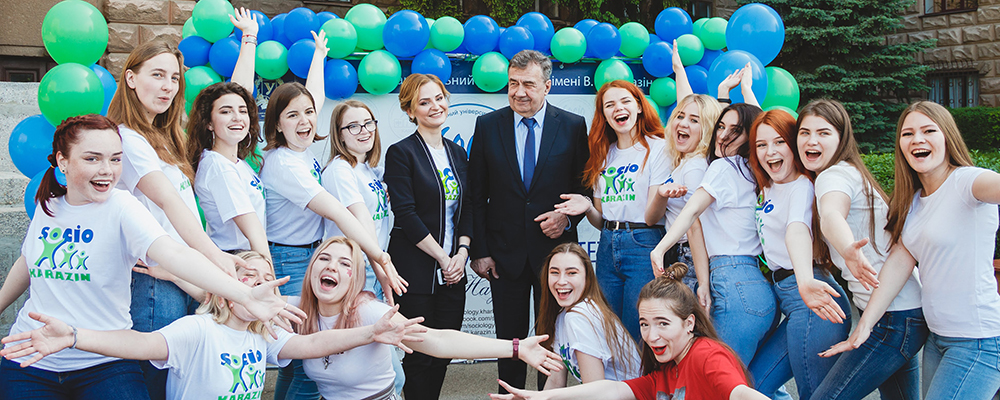
Do you want to understand people, anticipate social trends, create strong communications, work with media, advertising, data, and real social change? Then join us — an institute where students learn to see more, think deeper, and shape the future!
Our Institute is a space for those who want not simply to earn a degree, but to learn how to analyze reality, work with information, create communications, study society, and help people. Our motto is «Changing Society for the Better». This means that we teach students not merely to observe change, but to understand and analyze it and to act in ways that make the world more just, open, and humane.
The Education and Research Institute of Sociology and Media Communications (formerly the School of Sociology until 2025) was founded in 1990 and became the first school of sociology in Ukraine. Over this period, it has educated more than 4,000 graduates who work in Ukraine and abroad. Here, students can pursue careers as sociologists, researchers, journalists, media professionals, PR specialists, advertising specialists, marketers, social workers, analysts, or managers of social and communications projects.
Why Is This Relevant Today?
The modern world is changing very rapidly: war, digitalization, migration, information attacks, social tensions, changes in the media, the development of artificial intelligence, and new forms of communication — all of this requires specialists who are able to: understand people and social processes; work with data and research; analyze public opinion; create effective communication campaigns; recognize manipulation and disinformation; work with media, brands, communities, and social groups; help people in difficult life situations; make evidence-based decisions rather than decisions based on assumptions. Our Institute trains precisely such specialists!
Institute Structure
The Institute brings together departments, educational centers, and practical units that help students combine theory, research, and real professional experience. The Institute’s structure includes:
- Department of Sociology;
- Department of Political Sociology;
- Department of Applied Sociology and Social Communications;
- Department of the «Karazin School of Social Work»;
- Department of Media Communications;
- Department of Sociological Research Methods;
- Educational Center for Social Sciences and Humanities Research;
- Media Practice Training Laboratory “MediaLab”;
- Institute Press Center.
Educational Programs
The Institute provides training for Bachelor’s, Master’s, and PhD students in three specialties: C5 «Sociology», C7 «Journalism», and I10 «Social Work and Counselling». These specialties are relevant and timely because they all work with the main resources of the modern world — people, information, and trust.
Sociology helps us understand how society lives: what concerns people, how values, attitudes, behavior, needs of communities, and different social groups change. This specialty is for those who are interested in exploring reality, working with data, conducting surveys, analyzing public opinion, and explaining complex social processes in simple terms.
Journalism and Media Communications are particularly important at a time when information influences decisions, emotions, reputation, politics, and business. Students learn to create high-quality content, work with media, develop communication strategies, recognize manipulation, combat disinformation, and communicate with different audiences clearly and responsibly.
Social Work and Counselling is a profession for those who want to support people and drive change in society. Here, helping others becomes not merely a calling, but a modern professional field based on empathy, knowledge, responsibility, and real impact. This field is for those who want to work with people, communities, and social projects, support those who find themselves in difficult life circumstances, and find solutions where professionalism, humanity, and trust are needed.
Together, these specialties provide an opportunity not merely to observe change, but to understand, explain, communicate, and contribute to positive change in society.
| Level of Education | Specialty | Educational Programs |
|---|---|---|
| Bachelor’s Degree | C5 «Sociology» | «Socio-Political Studies» «Sociology of Communications, Advertising and Public Relations» |
| C7 «Journalism» | «Media Communications and Public Relations» | |
| I10 «Social Work and Counselling» | «Social Work and Counselling» | |
| Master’s Degree | C5 «Sociology» | «Social Technologies» «Digital Society» |
| C7 «Journalism» | «Media Communications» | |
| PhD | C5 «Sociology» | «Sociology» |
| C7 «Journalism» | «Journalism» |
What Is Studying at the Institute Like?
Studying at the Institute is not just lectures and notes; it is research, analytics, media projects, teamwork, practical placements, meetings with employers, guest lectures, and real-world cases. Students are offered more than 100 courses. These include speechwriting and copywriting, political sociology, social psychology, marketing research, public policy and analysis, gender studies, media analytics, data journalism, investigative journalism, crisis communications, Internet marketing, media relations, social marketing, mediation and conflict resolution, social work management, and other modern disciplines.
Students complete introductory training and professional placements, may work in University units, and can participate in the Press Center, media projects, research, and communication initiatives. Here, students can try themselves in different roles while still studying: researcher, journalist, SMM specialist, PR manager, analyst, interviewer, moderator, social worker, project manager, or author of communication campaigns.
Faculty
The Institute’s lecturers are scholars, researchers, practitioners, and mentors. They conduct sociological research, participate in national and international projects, and cooperate with civil society organizations, public institutions, media, think tanks, and businesses.
Practitioners, experts from the civil society sector, media, international organizations, as well as professors from European and American universities, also contribute to teaching. This means that students work not only with textbooks, but also with current professional approaches, real-world cases, and international experience. The learning process is based on dialogue, critical thinking, academic integrity, project-based work, and support for an individual educational trajectory.
Research and International Projects
The Institute is one of the leading centers of sociological science in Ukraine. It is a center of the Sociological Association of Ukraine and organizes sociological congresses, conferences, and academic events. Over the past five years, more than 20 Ukrainian and international research projects have been and are being implemented at the Institute.
The research topics cover issues directly related to contemporary life: social transformations, public opinion, war and its consequences, migration, gender studies, media studies, political communications, food security, digital inclusive education, social innovations, urban resilience, and the post-war recovery of Ukraine.
The Institute’s international projects include programs supported by the European Commission — Erasmus+, Horizon 2020, Horizon Europe — as well as the Swedish Institute, UNICEF, the Research Council of Norway, the National Research Foundation of Ukraine, the Ministry of Education and Science of Ukraine, and other partners. For students, this means an opportunity to study in an environment where knowledge is created not only in the classroom, but also through real-world research at an international level.
Practice, Partners, and Employers
The Institute maintains partnerships with sociological, marketing, advertising, PR, media, civil society, and international organizations. Among the Institute’s partners and professional destinations for its graduates are research companies, media organizations, think tanks, IT companies, public authorities, civil society organizations, international institutions, and businesses.
Among the Institute’s partners are: UNIT.City, Rating Sociological Group, Social Monitoring Center, Kyiv International Institute of Sociology (KIIS), Razumkov Centre, Oleksandr Yaremenko Ukrainian Institute for Social Research, FAMA Sociological Agency, GFKUkraine, Ukrainian Marketing Group, Yasno Research & Consulting Group, Norwegian Institute for Urban and Regional Research, George Mason University, Oslo Metropolitan University, The New School for Social Research, University of Zielona Góra, Swedish Institute, Uppsala University, European University Viadrina Frankfurt (Oder), Mid Sweden University, Fundacion CARTIF, University of Gothenburg, Lunds University, Tallinn University of Technology, Kharkiv City Council, Kharkiv Regional Military Administration, Sociological Association of Ukraine (SAU), Kharkiv City Center for Social Services «Dovira».
What Careers Can You Pursue After Graduation?
An education at the Institute opens up not just one profession, but a whole range of opportunities. Graduates can work as:
- sociologists and public opinion researchers;
- sociological data analysts;
- specialists in marketing, political, and social research;
- UX researchers;
- journalists, media analysts, and fact-checkers;
- PR specialists, advertising specialists, and communications managers;
- SMM managers, content strategists, and copywriters;
- crisis communications specialists;
- political analysts and consultants;
- marketers and consumer behavior researchers;
- managers of social and humanitarian projects;
- monitoring and evaluation specialists;
- social workers, counsellors, and support program coordinators;
- managers in the civil society sector and international organizations.
Our graduates are needed wherever it is necessary to understand people, work with information, explain complex issues, build trust, analyze change, and make decisions.
Student Life
The Institute is not only about studying; it is also a community. It has a student council, a trade union organization of students and PhD students, a student research society, and other initiatives. Students participate in conferences, workshops, language clubs, meetings with graduates, Open Days, cultural and professional events. This helps them make friends, find a team, establish their first professional contacts, and find their place in the community #Sociofamily.
International Cooperation
The Institute actively cooperates with universities and research organizations in Norway, the United Kingdom, the United States, Canada, Germany, Finland, Denmark, Poland, Austria, and other countries. Its partners include Oslo Metropolitan University, Cambridge University, York University, The London School of Economics and Political Science, The New School for Social Research, Boston University, George Mason University, University of Toronto, Freie Universität Berlin, Humboldt-Universität zu Berlin, University of Zielona Góra, University of Vienna, and others. The Institute’s lecturers receive grants, undertake research placements, teach, and conduct research at European and American universities. This helps integrate modern international standards, new methodologies, and current research practices into the educational process.
By Choosing Us, You Choose More Than a Specialty
The Education and Research Institute of Sociology and Media Communications is a place for those who want to understand the world and make an impact on it. Here, students learn to see the bigger picture, think critically, work with data, people, texts, media, social issues, and communication challenges. Here, you can find your profession at the intersection of sociology, journalism, PR, advertising, analytics, social work, politics, the civil society sector, business, and international projects.
Address: 61022, 4 Svobody Square, Room 1-5, Kharkiv, Ukraine.
Director
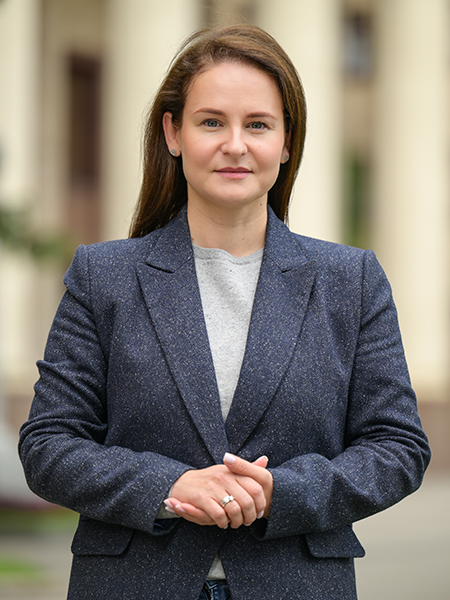
Olena Serhiivna Muradian
PhD of Sociological Sciences, Associate Professor
Phone: +380 (97) 113-56-84 (Olena Muradian), +380 (96) 066-53-06 (Viktoriia Hubarenko, Dean’s Office)
Email: socio@karazin.ua
Address: 61022, 6 Svobody Square, North Building, Room 346, Kharkiv, Ukraine