The Role of Science and Universities in Ukraine’s Post-War Recovery Discussed in Kharkiv
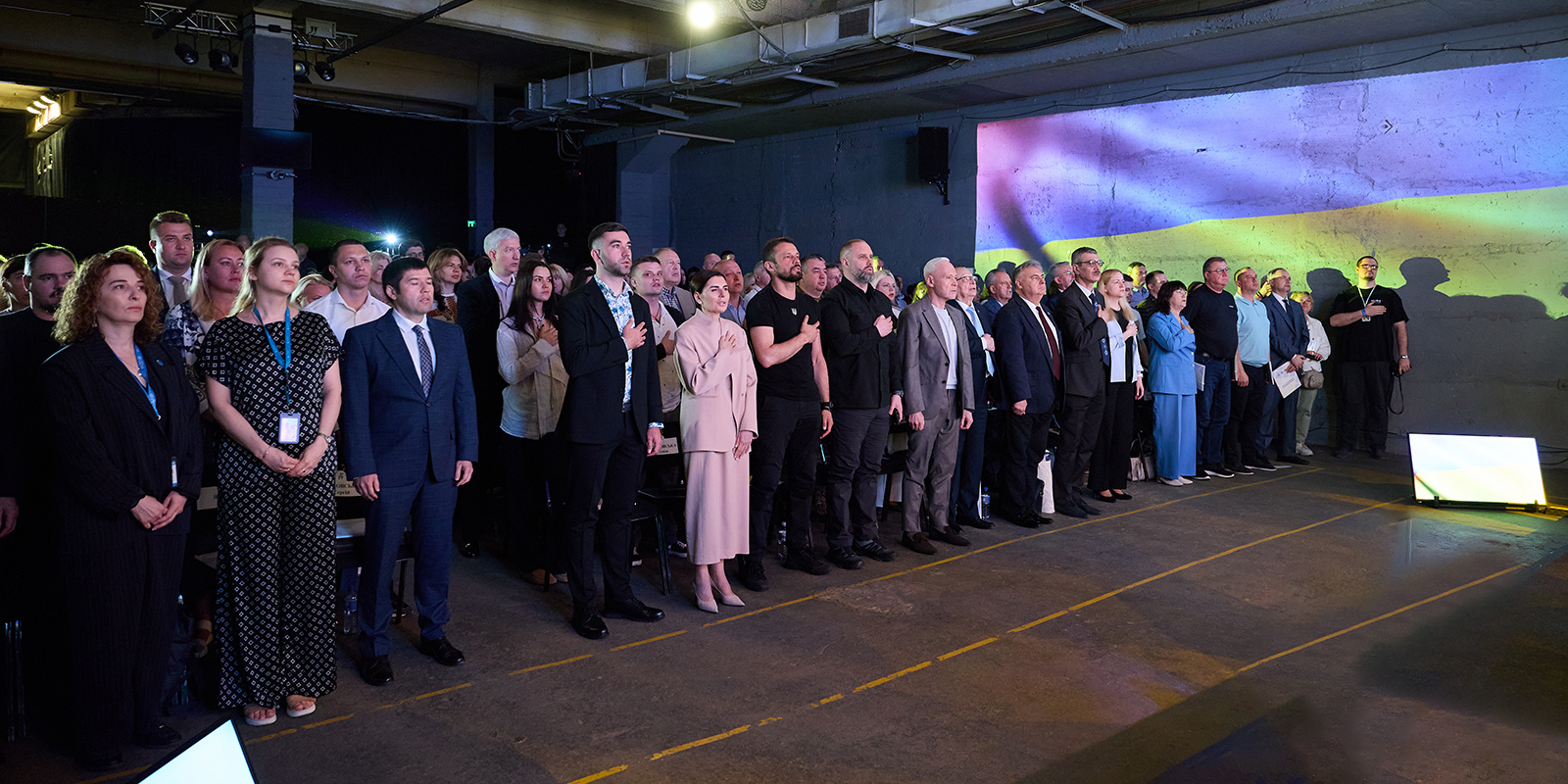
Leading Ukrainian scientists, early-career researchers, and representatives of national, regional, and local authorities discussed the present and future of science and scientists in Ukraine’s frontline regions during the All-Ukrainian Forum. The event was organized by the Association of Frontline Cities and Communities in cooperation with the Kharkiv City Council. Around 100 leaders and representatives of higher education institutions from various regions of Ukraine participated in the forum, including delegates from Odesa, Mykolaiv, Zaporizhzhia, Dnipropetrovsk, and Kharkiv regions. The discussions focused on the role of science and universities in the post-war reconstruction of the country, community development, and the formation of the economy of the future.
The discussion was also joined by the Rector of Karazin University, Tetyana Kaganovska.
“When people talk about Ukraine’s recovery today, they most often refer to security, infrastructure, and the economy. However, any recovery begins not with buildings or technologies. It begins with people and knowledge. That is why the development of science today extends far beyond the academic environment. It is a matter of national security, economic competitiveness, and the future of the state. The war has demonstrated that countries prevail not only because of their resources. They prevail because of their ability to create new knowledge, technologies, and solutions,” noted Tetyana Kaganovska.
The Rector of Karazin University shared the institution’s experience as one of Ukraine’s largest scientific centers and outlined the challenges facing Ukrainian science as a whole. These include preserving human capital, transforming fundamental research into practical solutions, promoting and developing the natural sciences, and addressing the social challenges brought about by the war.
During the panel discussion, the Head of the Association of Frontline Cities and Mayor of Kharkiv, Ihor Terekhov, emphasized that Ukraine’s reconstruction should rely not only on investments in infrastructure but also on its own scientific, educational, and intellectual potential.
“Our task is not simply to repair what has been destroyed, but to make the country better than it was before the war. To achieve this, universities and research institutions must not merely participate in the reconstruction process — they must become its architects and leading think tanks. This is where solutions for the country’s development for decades to come should be created: from new technologies and modern engineering to the training of specialists for the economy of the future,” stated Ihor Terekhov.
The event was attended by the Chairman of the Verkhovna Rada Committee on Education, Science and Innovation, Serhii Babak; Deputy Minister of Education and Science of Ukraine, Mykola Trofymenko; and Head of the Kharkiv Regional Military Administration, Oleh Syniehubov. During the forum, participants also discussed the importance of working with school students, who represent the future of Ukrainian science, as well as the concept of lifelong learning. The participants agreed that frontline universities are currently carrying out an exceptionally difficult mission — preserving young people, science, and the academic environment in the regions where the country will rebuild after the war.


.jpg)
.jpg)
.png)