Monitoring Study of the Quality of Education were Presented in Kharkiv
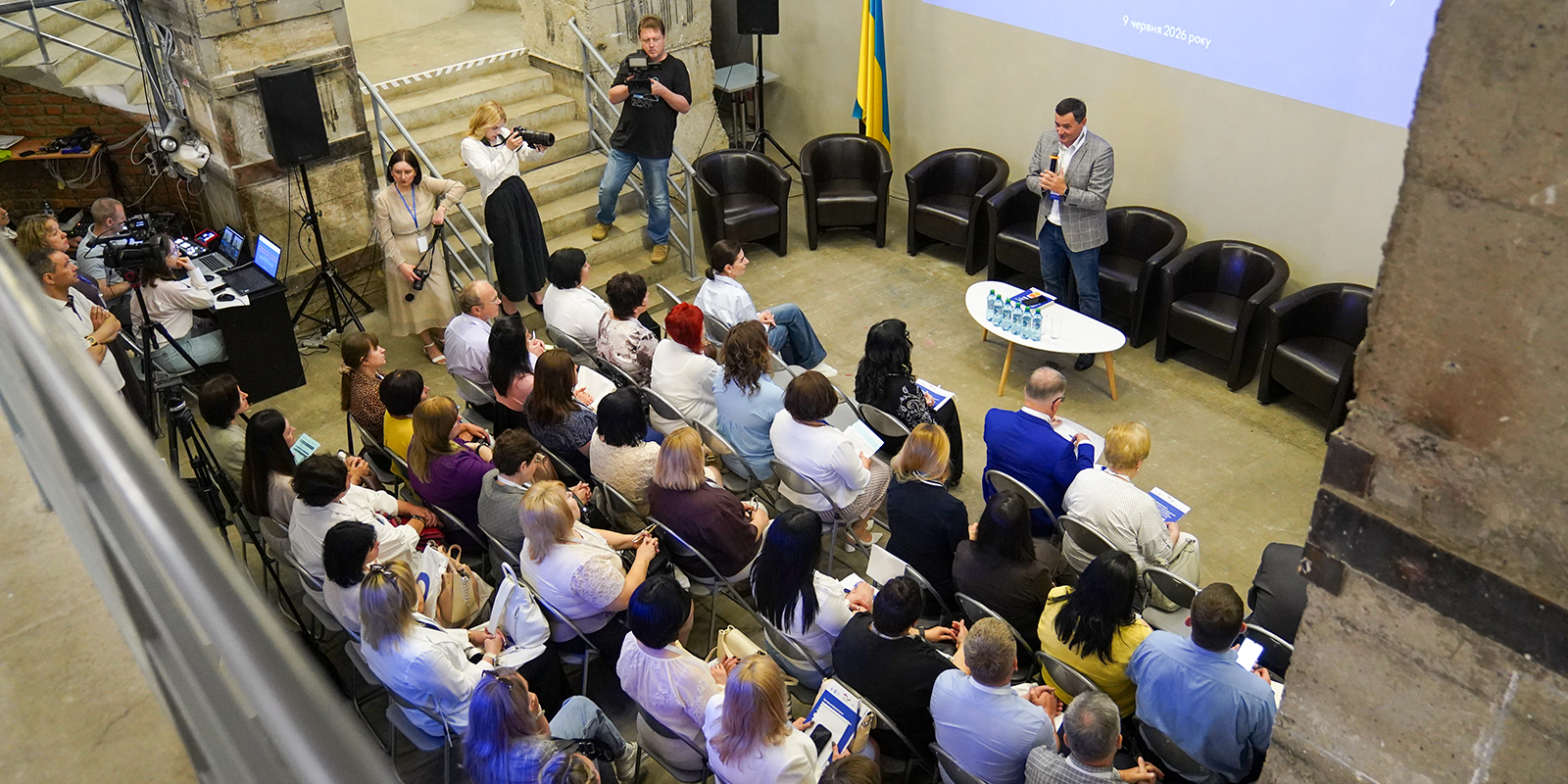
Within the walls of Karazin University, the results of the third stage of the nationwide monitoring study of the quality of education in general secondary education institutions under martial law were presented. These are the results of the academic achievements of 6th and 8th grade students in the Ukrainian language and mathematics. Thus, sixth-graders demonstrated stable results in mathematics and some improvement in knowledge of the Ukrainian language, while among eighth-graders, a downward trend was observed, especially in mathematics.
The study was presented by the Head of the State Service for Quality of Education of Ukraine, Ruslan Hurak:
"The first and most important conclusion (of the study) is that Ukrainian education has survived. Despite the war, air raid alerts, distance and blended learning, children continue to learn, teachers continue to work, and schools and communities continue to maintain the system.
But this does not mean that there are no problems. The results show that educational losses are accumulating, and the gaps we see today did not arise in one year. They cannot be overcome with one-time solutions or beautiful slogans. This requires system flexibility, different approaches, stronger teacher support, and an honest conversation about what really works. At the same time, we also have positive signals: the results in the Ukrainian language show greater stability, and in some indicators, there is improvement. And for us, these results are not just numbers. This is a clue as to where exactly the child, the teacher, the school, and the community need support.
Because quality education in wartime is not about "getting by somehow." It's about seeing weaknesses, responding quickly, and helping every child not fall behind in their learning."
Analysis of the study results confirmed a direct correlation between the didactic quality of the lesson and academic performance. Also, the return to in-person learning in most regions was a key factor in improving the situation. On the other hand, prolonged distance learning without proper technical support continues to deepen knowledge gaps.
Educators from five regions of Ukraine — Donetsk, Luhansk, Dnipropetrovsk, Zaporizhzhia, and Kharkiv regions — joined the discussion. As noted by the Rector of Karazin University, Tetyana Kaganovska, for the frontline regions, the issue of the quality of education is a matter of preserving human potential. She emphasized that today it is not enough just to return children to education; it is necessary to create conditions for the full development of the competencies needed to rebuild the country:
"Karazin University, as one of the leading universities in Eastern Ukraine, sees its mission as much broader than just training specialists. We see ourselves as a partner of schools, communities, and state institutions in creating a quality educational environment for every child. The results of the study once again remind us that the quality of education is determined not only by the level of knowledge. It is also a matter of accessibility, safety, motivation, support, and equal opportunities. And the responsibility for this lies with all of us — the state, educators, universities, communities, and parents."
The attendees noted that today, mathematical education requires special attention, as it is in this area that the most noticeable difficulties are observed among high school students. The results of the study indicate the need to develop skills of analysis, critical thinking, and application of knowledge, rather than just its reproduction.
Karazin University emphasizes that universities must actively participate in overcoming educational losses by working with teachers, schools, and communities, and adds that it is necessary to form a single educational ecosystem: school - university - community - employer.
The study was conducted by the State Service of Quality of Ukraine in cooperation with the Eastern Interregional Department of the State Service of Quality of Education and the South-Eastern Interregional Department of the State Service of Quality of Education.


.jpg)
.jpg)
.png)