An Interactive Session on Youth Policy Took Place at Karazin University
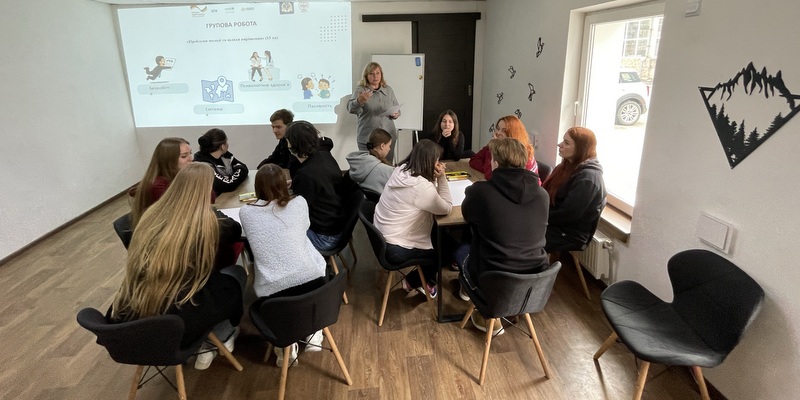
On April 24, 2026, an interactive training session titled “Youth Policy and Youth Work in Ukraine: How to Create Opportunities for Young People” took place in the student coworking space of the Education and Research Institute “Ukrainian Engineering and Pedagogics Academy.”
The event was conducted by representatives of the Center for Innovative Education Technologies of the Institute: the Center Coordinator, Deputy Director of the Institute, Professor Maryna Vasylieva, and a trainer in social entrepreneurship and creativity development, expert in internationalization and project activities, Deputy Head of the University’s International Relations Office Roman Nesterenko.
The session was organized within the framework of the project “Youth Participation and Policy: Strengthening Youth Engagement, Governance, Budgeting, and Life Skills Development in Lviv, Volyn, and Zakarpattia Regions,” implemented by the NGO “Youth Platform” with the support of UNICEF and financial assistance from the Government of Germany through the German Development Bank (KfW).
Nearly 30 participants took part in the session, which was held in a blended format: both offline and online.
The event aimed to develop students’ understanding of modern youth policy, its tools and opportunities, as well as to enhance practical skills in civic participation, teamwork, and the creation of their own initiatives.
The program combined a mini-lecture, interactive exercises, discussions, group work, a role play, and elements of project-based activities.
At the beginning, participants joined an exercise titled “Youth Today Is…,” where they outlined their vision of modern youth, its opportunities, needs, and challenges.
Key discussion topics included access to education, employment, the impact of war on young people’s lives, mental health, civic engagement, and youth participation in societal processes.
During the theoretical part, participants explored the fundamentals of youth policy in Ukraine, key regulatory documents, and the main directions of its implementation. Special attention was given to opportunities in non-formal education, youth support programs, entrepreneurship development, and international mobility.
An important component of the session was the presentation of the international project ResilientMind, aimed at developing critical thinking and strengthening young people’s resilience to disinformation.
Participants learned about the project’s goal of building the ability to recognize manipulation in the digital environment, as well as about the creation of an interactive online platform with personalized learning pathways. A distinctive feature of the initiative is the active involvement of young people as co-creators of content and educational materials.
The practical part of the session focused on addressing current challenges faced by young people.
Working in groups, participants analyzed issues such as unemployment, emigration, mental health, and low levels of civic engagement, and proposed their own solutions.
A separate activity that generated particular interest was the development of youth projects.
Teams presented ideas aimed at promoting leadership, volunteering, career guidance, and mental health support. This format allowed participants to apply their knowledge in practice and feel like initiators of positive change.
The session concluded with a reflection, during which participants shared their impressions and identified key insights. They highlighted the practical value of the event, the relevance of the topics, and the applicability of the acquired knowledge in real life.
.jpg)
.jpg)
.png)