


A “Roadmap” for Cooperation between Karazin University and Academic Lyceums Developed for the New 2026/2027 Academic Year
%20(1)%20(1).jpg)
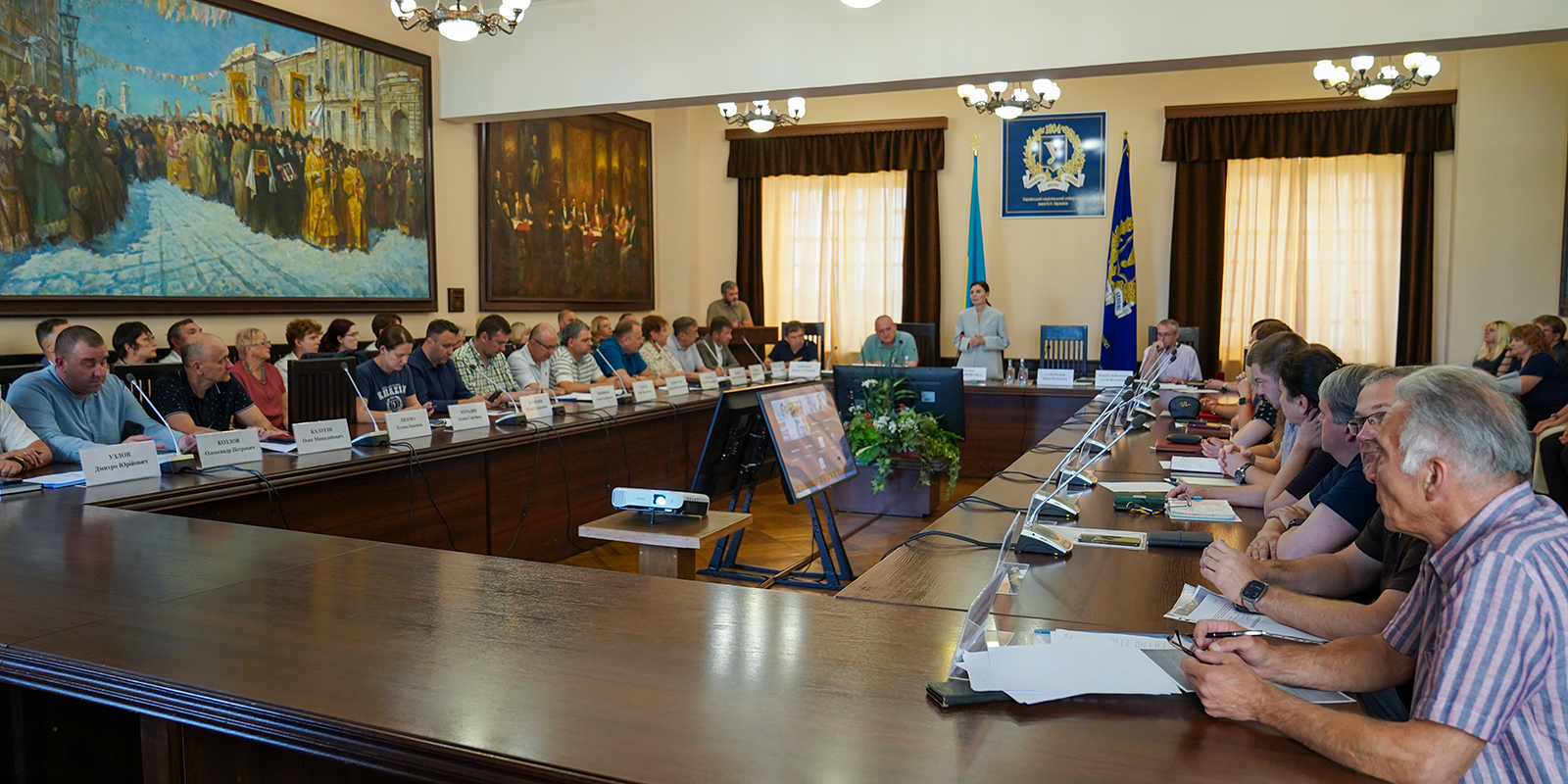
A working meeting was held at V. N. Karazin Kharkiv National University between Anatolii Babichev, Vice-Rector for Academic and Research Affairs, and the directors of academic lyceums of regional communal ownership in Kharkiv and Kharkiv Region:
- Communal Institution “Kharkiv Academic Lyceum No. 9” of the Kharkiv Regional Council, Iryna Kulish,
- Communal Institution “Kharkiv Academic Lyceum ‘INTEL 13’” of the Kharkiv Regional Council, Halyna Mykhailenko,
- Communal Institution “Chuhuiv Academic Lyceum ‘SYNERHIA’” of the Kharkiv Regional Council, Nataliia Lysak.
During the joint meeting, the results of the first pilot stage of implementing the priorities of the educational and research cluster “Karazin University — for Students of Academic and Research Lyceums in Kharkiv and Kharkiv Region” in the 2025/2026 academic year were analyzed. Mykhailo Tatarinov, Director of the Institute of Continuing Education, noted that the involvement of leading academic and research practitioners and specialized experts from individual departments of the School of Biology, School of Medicine II, School of Philology, the Education and Research Institute of Chemistry, the “Karazin BioMed” biomedical laboratory, the “Karazin Rehab” University Rehabilitation Center, the Central Scientific Library, and the Museum of History in relevant practical classes, training sessions, master classes, and workshops enabled 133 students, teachers, and administrative representatives from the academic lyceums to participate. This approach significantly strengthened the practical component of the educational process, taking into account the specialization of each of these institutions of general secondary education, and enhanced the career guidance component.
The participating directors shared the results of their teams’ work with the direct stakeholders of the Karazin University educational and research cluster, discussed current educational challenges related to organizing the participation of lyceum students and subject teachers in activities held at laboratory and hub facilities, as well as logistical issues and ways to increase the involvement of students’ parents in cluster activities. They also put forward several practical proposals to develop a “roadmap” for further cooperation with Karazin University in the new 2026/2027 academic year, taking into account the cluster’s previous successful initiatives and existing cooperation agreements.
Summing up the working meeting, Anatolii Babichev identified the priority goals, practical tasks, specific participants, and their respective responsibilities in implementing the “roadmap” of the educational and research cluster “Karazin University — for Students of Academic and Research Lyceums in Kharkiv and Kharkiv Region” in the new 2026/2027 academic year.
.jpg)
.png)
.jpg)
.png)

.jpg)

.jpg)