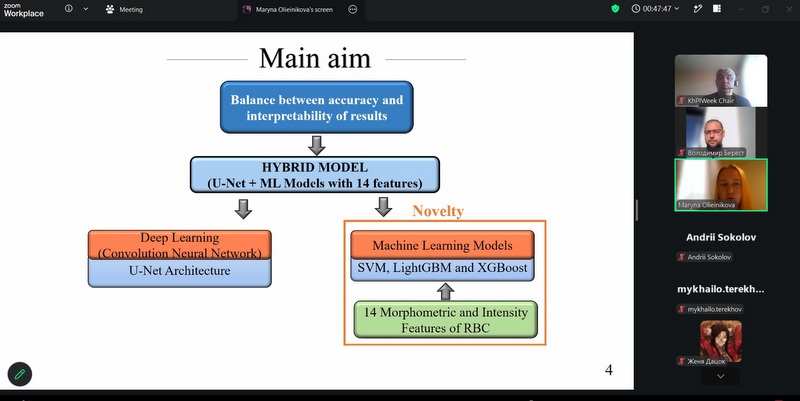
On April 3, 2026, a large-scale online training session was held for academic staff of V. N. Karazin Kharkiv National University, focusing on the integration of artificial intelligence technologies into the educational process and research activities.
.png)
The speaker of the event was Maksym Valin, an expert in the digital transformation of education and the implementation of AI technologies in research. The central highlight of the training was the presentation of the University’s Policy on the Use of AI. This document defines ethical boundaries and regulatory requirements for working with AI tools, ensuring adherence to the principles of academic integrity. Participants discussed how to integrate AI into their work so that it remains a reliable assistant rather than a tool for misuse.
The training program covered the most relevant aspects of AI use in education and research, including:
- a detailed overview of ethical considerations and how the University’s new regulations align with global standards in ensuring academic integrity;
- hands-on introduction to Gemini and NotebookLM for organizing large volumes of sources and expanding the toolkit of modern researchers;
- development of next-generation learning tasks that are resistant to automated cheating, as well as the use of AI to accelerate the creation of high-quality syllabi.
“Artificial intelligence is not a threat but a powerful enhancer of a teacher’s expertise. Our task is to teach higher education students to use these tools critically and responsibly,” noted Yevhen Meniailov, Acting Dean of the Faculty of Mathematics and Computer Science.
The two-hour Zoom session brought together over a hundred lecturers, who had the opportunity to receive answers to pressing questions about the future of higher education in the age of algorithms. As a result of the training, participants received practical recommendations that can already be implemented in curricula and research projects.
Karazin University continues to stay at the forefront of technological change, creating a transparent and innovative environment for all participants in the educational process. We thank all colleagues for their active participation!


.png)


.jpg)
.jpg)
.png)