Critical Thinking and Countering Manipulation: Karazin University’s Contribution to the ResilientMind Project
The Erasmus+ ResilientMind project, “A Mind Resilient to Manipulation and Disinformation”, brings together partners from different countries to promote critical thinking, develop skills for recognising manipulation, and strengthen resilience to disinformation.
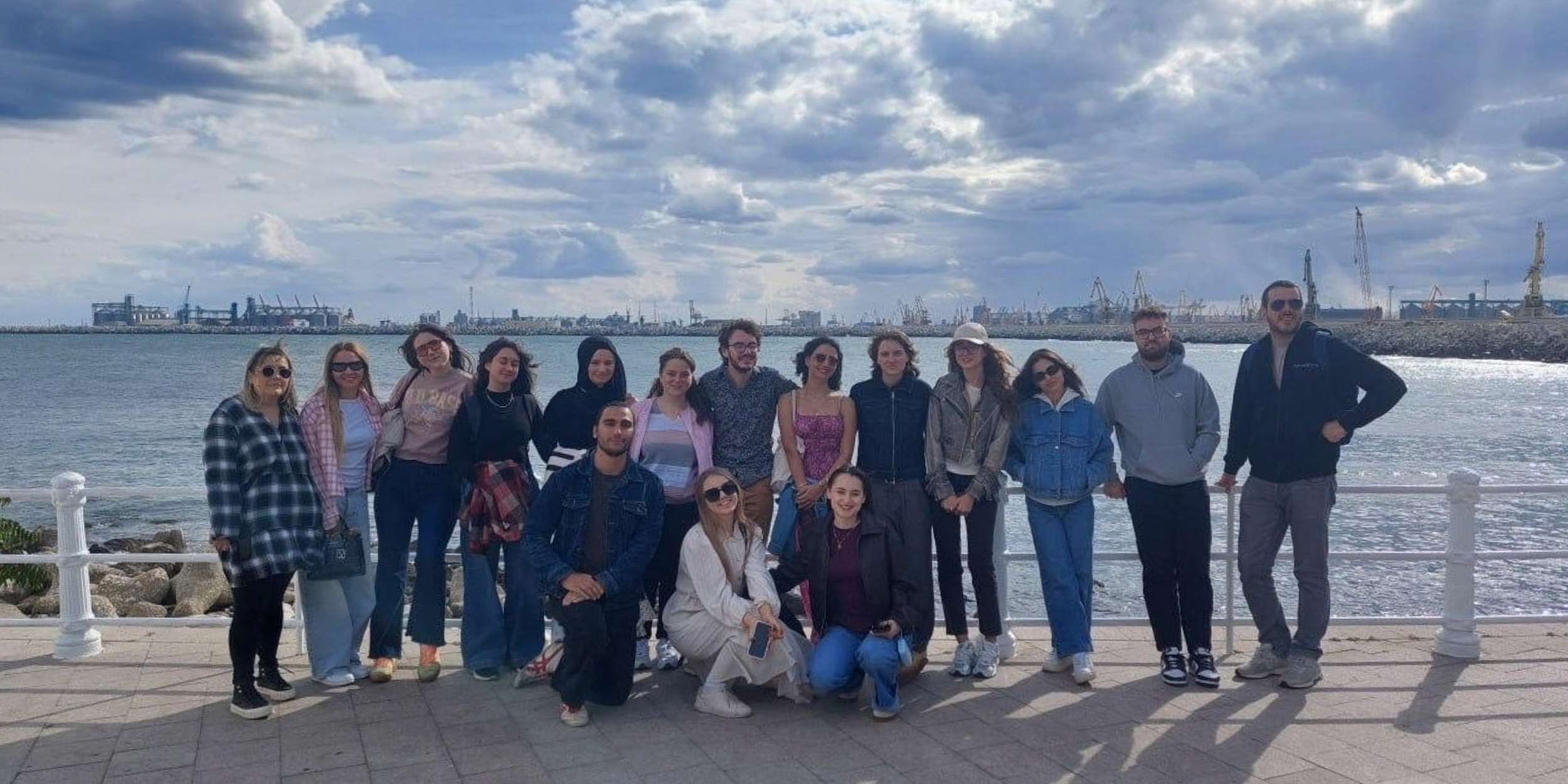
From 22 to 24 September 2026, an international training session within the project took place in Jupiter, Romania. Karazin University was represented by Maria Lebedieva, a specialist at the International Relations Office, and Oleksandra Frolova, a specialist at the Public Relations Centre. They took part in the training and exchange of experience, presented the “Strategies for Countering Manipulation” module developed by the University team, and contributed to piloting its practical activities.

Over the three days, participants piloted activities developed by teams from France, Greece, Türkiye, Ukraine, Bulgaria and Romania. The programme combined group discussions, analysis of real-life and simulated scenarios, team exercises and collaborative work on approaches to countering information threats.
Participants explored the psychological mechanisms of deception and self-deception, cognitive biases and manipulative influence techniques. They learned to verify claims, compare sources and assess the quality of evidence. Special attention was paid to deepfakes and AI-generated content.
The Ukrainian team focused on moving from recognising manipulation to taking practical action. Through exercises entitled “Mapping Manipulation Techniques”, “Counter-Manipulation Strategy Lab” and “How to Respond Safely?”, participants analysed specific scenarios, identified manipulative tactics and selected safe and responsible response strategies: pausing before reacting, clarifying the situation, verifying information, setting personal boundaries, ending unsafe interactions or seeking help.
A key feature of the Ukrainian module was its combination of personal resilience to manipulation with preparing youth workers to apply these methods in their work with young people. After completing the exercises, participants discussed the skills being developed and how the activities could be adapted for different youth groups.
The training also provided a platform for international exchange of experience. Representatives from different countries discussed approaches to working with young people and ways of explaining complex information-related phenomena through accessible practical exercises. Intercultural interaction was further encouraged through an introduction to Ukrainian music during a group activity and a joint visit to Constanța.
For Karazin University, the training marked an important stage in piloting its contribution to the joint ResilientMind curriculum. Feedback from project partners and participants will be used to further improve the module and its practical activities.
.jpg)
.jpg)
.png)