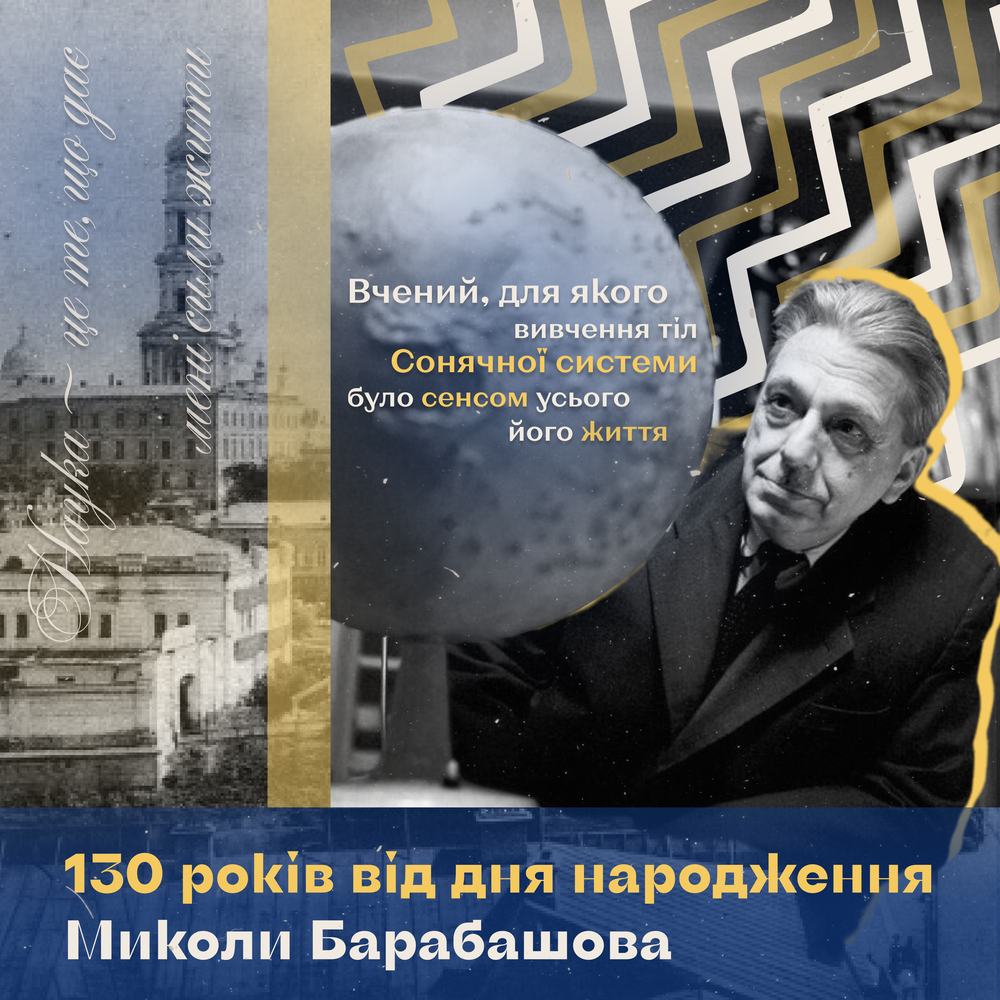
The activity of the prominent scientist, academician Mykola Barabashov, is known not only in Ukraine but also far beyond its borders. Mykola Pavlovych dedicated his life to the study of the bodies of the Solar System and was one of the founders of the essentially new science of planetology, conducting research on the Moon and planets during the early period of humanity's space exploration.
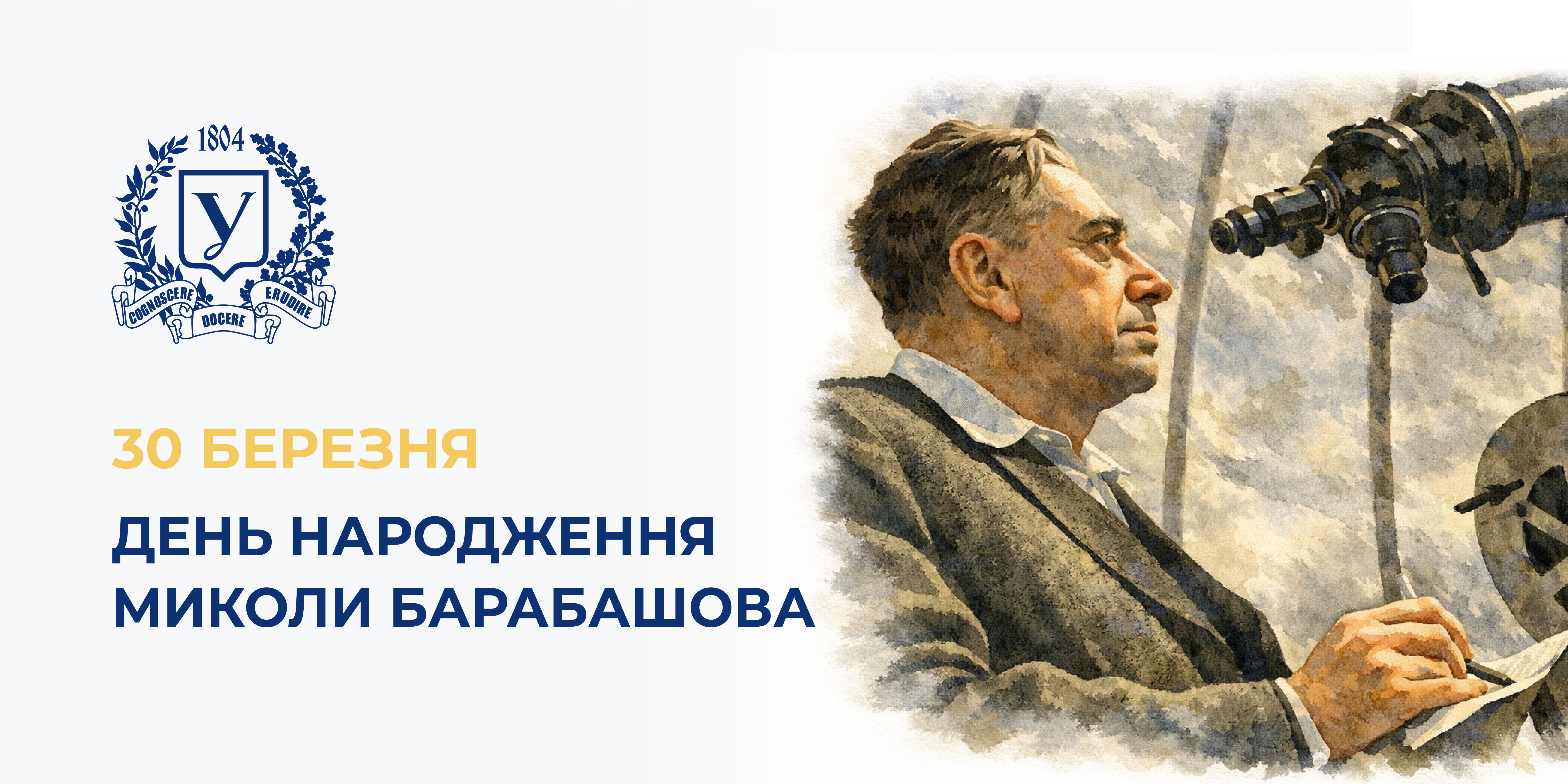
Mykola Barabashov was born in Kharkiv on March 30, 1894, into an intellectual family. As a child, he loved classical music and played the violin himself, studied diligently, and read a lot. Astronomy captured his imagination in his early years. At the age of 15, he was already publishing his observations of sunspots, Venus, and Mars.
After graduating from high school, Mykola Pavlovych became a student at Tartu University (Estonia). However, the climate in the Baltic States proved unsuitable for the young man, and he soon returned to his hometown, as he was diagnosed with tuberculosis.
In 1914, Mykola Pavlovych began his studies at Kharkiv University. From that time on, all his activities as a scientist, educator, science popularizer, and public figure were associated with the university, the astronomy department, and the Astronomical Observatory.
In 1930, Mykola Pavlovych was appointed director of the University's Astronomical Observatory. The scientific problems Barabashov had to solve were diverse, and his research brought popularity to the young scientist. And at the age of 75, he experienced a rare joy for an astronomer: confirmation by space stations of his conclusions made near the telescope about the structure of the lunar surface.
In 1933, the scientist became the Head of the astronomy department at Kharkiv University, and in 1936, without defending a dissertation, he was awarded the academic degree of Doctor of Physical and Mathematical Sciences based on the totality of published scientific works.
During the difficult post-war years of 1943-1945, he served as the rector of Kharkiv University. At that time, it was necessary to restore the university building and the ruined scientific base of the Astronomical Observatory. The work was enormous, but in May 1945, due to the worsening of his illness, Mykola Pavlovych had to leave the position of rector.
His talent was multifaceted: he was not only a prominent scientist and science organizer but also a great educator. For over 50 years, he lectured at the astronomy department of Kharkiv University and other educational institutions in the city, as well as for the general public.
He passed away on April 29, 1971, at the age of 77. Lung disease plagued him all his life, but despite this, he worked at home in his office until his last days. This is indeed a bright example of dedication to science and service.
The scientist's merits to national science and higher education were duly appreciated. In particular, a minor planet No. 2883 was named after him, and on Mars, in the northern hemisphere, there is a crater named after Barabashov. Overall, over 40 objects in the Solar System (craters on the Moon, Mars, and Venus, minor planets) were named after astronomers from Kharkiv University - Mykola Pavlovych's teachers and many of his students. A street and a metro station in Kharkiv were named after him.
Research in the field of lunar and planetary physics brought wide popularity not only to Mykola Barabashov but also to the Kharkiv Astronomical Observatory. The planetary school of Kharkiv, created by Mykola Pavlovych Barabashov, continues to actively conduct its research, continuing the glorious traditions of its Teacher. This is a tribute to the memory of the scientist, for whom the study of the bodies of the Solar System was the meaning of his entire life.
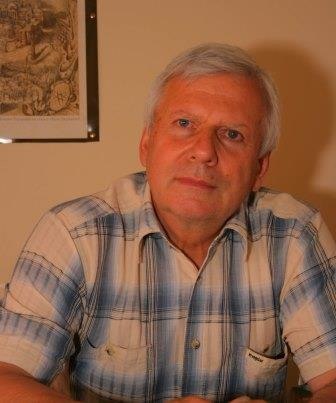
According to the memories of Professor Dmytro Lupishko, the founder of the Kharkiv asteroid scientific school, a student of academician Mykola Barabashov.


.png)
%20(1).jpg)
%20(1).png)

%20(1).jpg)
.jpg)