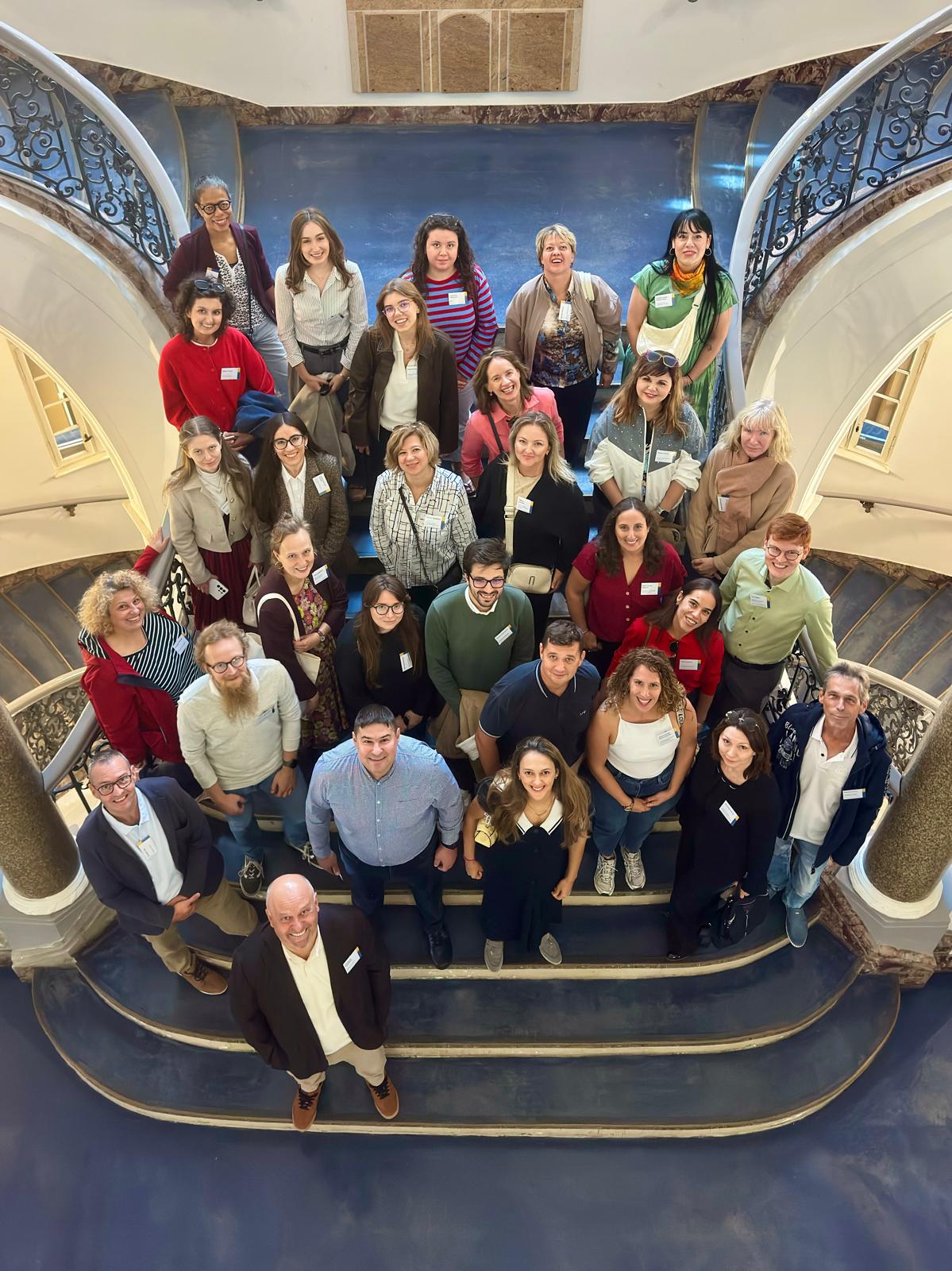
Researchers and Teaching Staff of the School of Physics and Technology Take Part in European Fusion Teacher Day 2026
.png)
On 2 October 2026, the 7th European Fusion Teacher Day (EFTD 2026) took place. This annual European educational event for physics and science teachers is organised by FuseNet, a European network of educational institutions in the field of nuclear fusion.
The Ukrainian national session was jointly organised by the Euratom National Contact Point (NCP) in Ukraine, the National Science Center “Kharkiv Institute of Physics and Technology” (NSC KIPT), and the School of Physics and Technology of Karazin University. The event brought together more than 65 participants from across Ukraine and focused on current issues in plasma physics, controlled nuclear fusion, and cutting-edge research in the field.
The main objectives of the national session were to showcase the latest achievements of Ukraine’s scientific community, provide methodological support for teachers in promoting modern physics among school students, and encourage young people to explore advanced technologies shaping the future of energy.
Pylyp Kuznietsov, Director of the School of Physics and Technology and a member of the High Scientific Council of the European Physical Society, emphasised the importance of the EFTD initiative in his welcoming address. He highlighted the active engagement of Ukraine’s scientific and educational community in the broader European context and noted the strong tradition of annual meetings with teachers and school students as part of the national session.
%20(1).png)
Yurii Kovtun, Head of the Euratom NCP in Ukraine for fusion, welcomed the participants and outlined prospects for the development of fusion research.
%20(1).png)
The programme featured a series of presentations by leading specialists in plasma physics and controlled nuclear fusion:
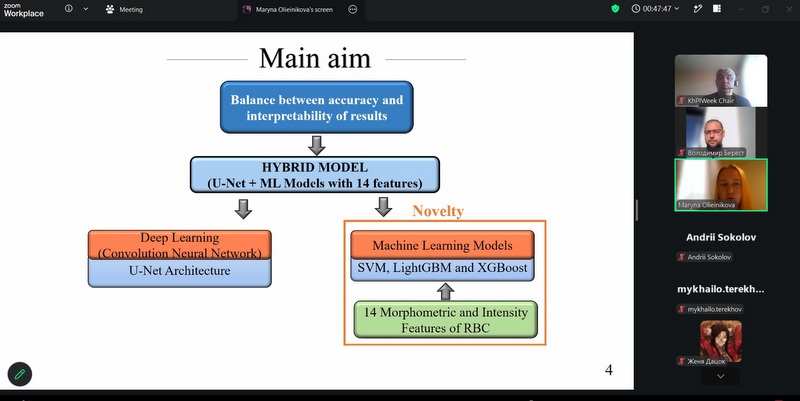
1. Mykola Marushchenko (Senior Scientist at the Max Planck Institute for Plasma Physics, Greifswald, Germany) delivered a presentation on methods of heating plasma to fusion temperatures, the principles of magnetic confinement, reactor energy balance, and electricity generation.
%20(1).png)
2. Oleksandr Trush (Senior Lecturer at the Department of Applied Physics and Plasma Physics, School of Physics and Technology) discussed complex theoretical aspects of electromagnetic wave propagation through plasma.
.png)
3. Yurii Martsenyuk (Research Scientist at the Institute of Plasma Physics, NSC KIPT) provided a detailed overview of the applications of low-temperature plasma, including glow discharges, in fusion experiments.
4. Yurii Kovtun (Head of the RF Plasma Heating Laboratory at NSC KIPT) delivered a presentation tracing the evolution of fusion energy, from fundamental scientific research to technology commercialisation and the development of private-sector start-ups.
The session was moderated by Vitalii Zhurenko, a representative of NSC KIPT and the Euratom NCP in Ukraine. He opened the session, outlined the activities of the Euratom NCP, and shared experience in organising science outreach events for school students and educators במסגרת the NURECAB project.
Following the Ukrainian session, participants had the opportunity to join the main European programme organised by FuseNet. It featured presentations of teaching materials, talks by international experts, and virtual tours of leading research facilities, including DIFFER, the IAEA Visitor Centre, and the experimental site of the international ITER project.
European Fusion Teacher Day 2026 marked another important step towards strengthening the integration of physics and engineering education and research in Ukraine into the European Research Area.
More information is available via this link.
.jpg)
.jpg)
%20(1).jpg)