Karazin University Hosts International Workshop on Sustainable Housing and Strong Communities within Erasmus+ NestED Project
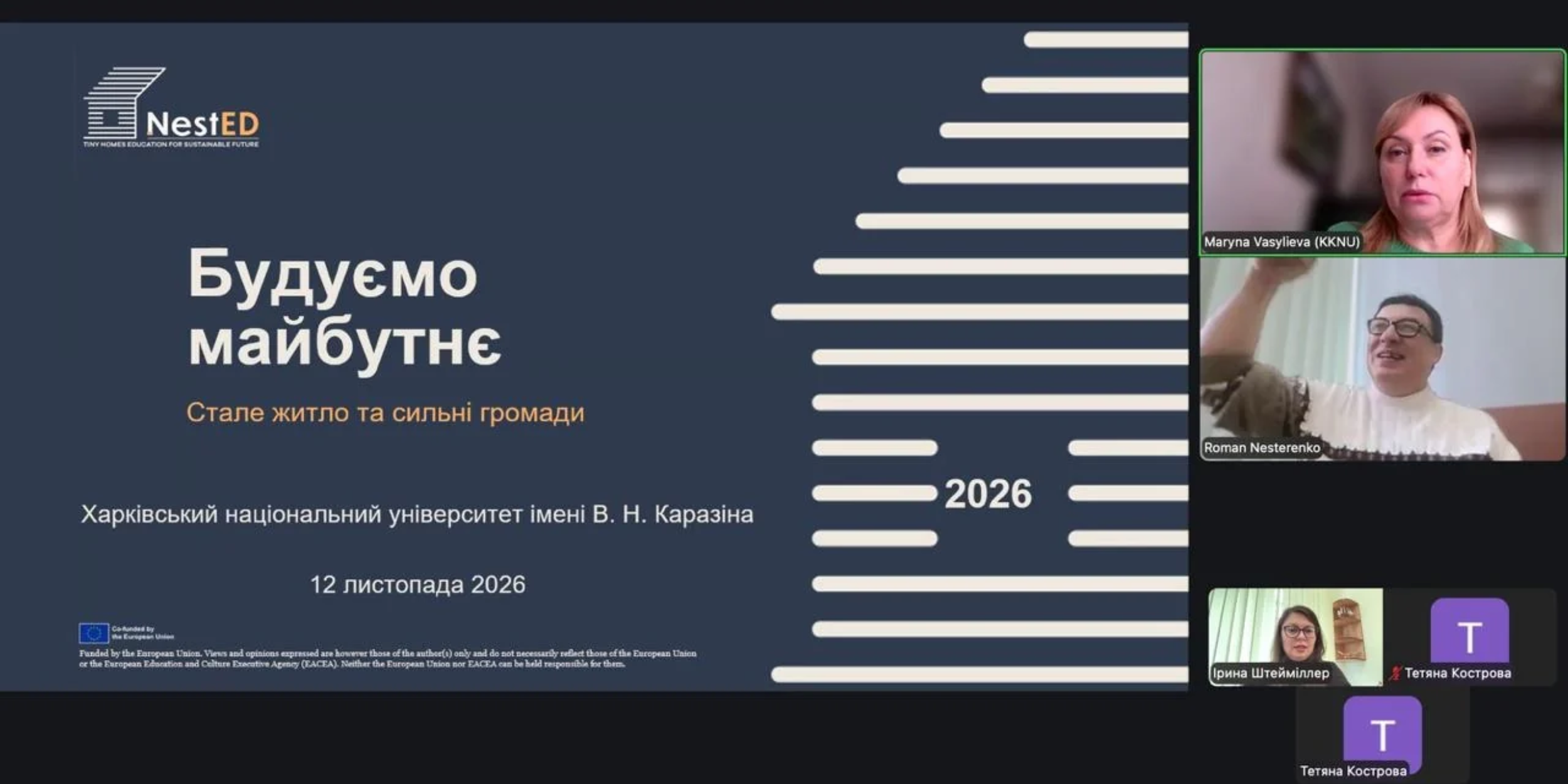
The team of V. N. Karazin Kharkiv National University held an online workshop entitled “Building the Future: Sustainable Housing and Strong Communities”. The event took place on 12 November 2026 as part of the international Erasmus+ project NestED – Tiny Homes Education for a Sustainable Future.
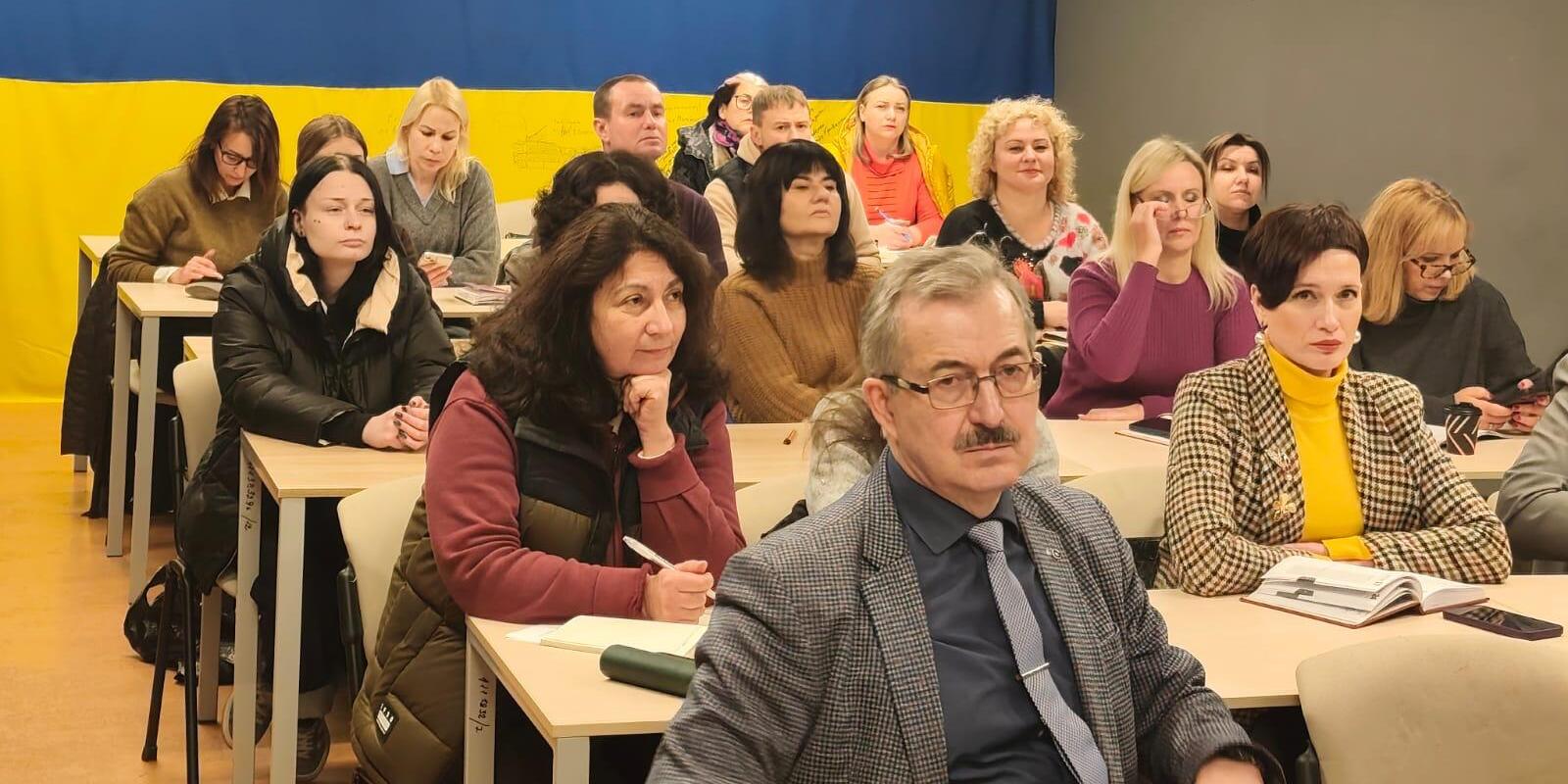
A total of 36 participants took part in the workshop. Registrants included students, particularly future specialists in construction and civil engineering, as well as teachers, education specialists, vocational training instructors and heads of educational institutions. The registered participants represented nine educational institutions across six regions of Ukraine. Sumy Region was represented by Okhtyrka Professional College of Sumy National Agrarian University; Zakarpattia Region, by Uzhhorod University; Dnipropetrovsk Region, by Dnipro Professional Technological College; Poltava Region, by Vocational Technical School No. 26 in Kremenchuk; and Lviv Region, by Mykolaiv Vocational Lyceum. Kharkiv Region was represented by Kharkiv Professional College of Construction and Industry, the Regional Centre for Vocational Education in Construction Technologies of Kharkiv Region, the Regional Centre for Vocational Education in Railway Transport and Agrotechnical Services, and V. N. Karazin Kharkiv National University.
The workshop aimed to familiarise participants with European and Ukrainian practices in developing sustainable, affordable and socially inclusive housing, as well as to explore opportunities for applying this experience in vocational education and the development of local communities.
During the first part of the event, participants were introduced to the outcomes of the international NestED project, including the analytical document NestED Blueprint, “What Works Best? European Lessons for Sustainable Community Housing, Tiny Homes and Lifelong Learning”, and interactive video case studies drawing on the experience of six countries: Sweden, Spain, France, Ireland, Germany and Ukraine.
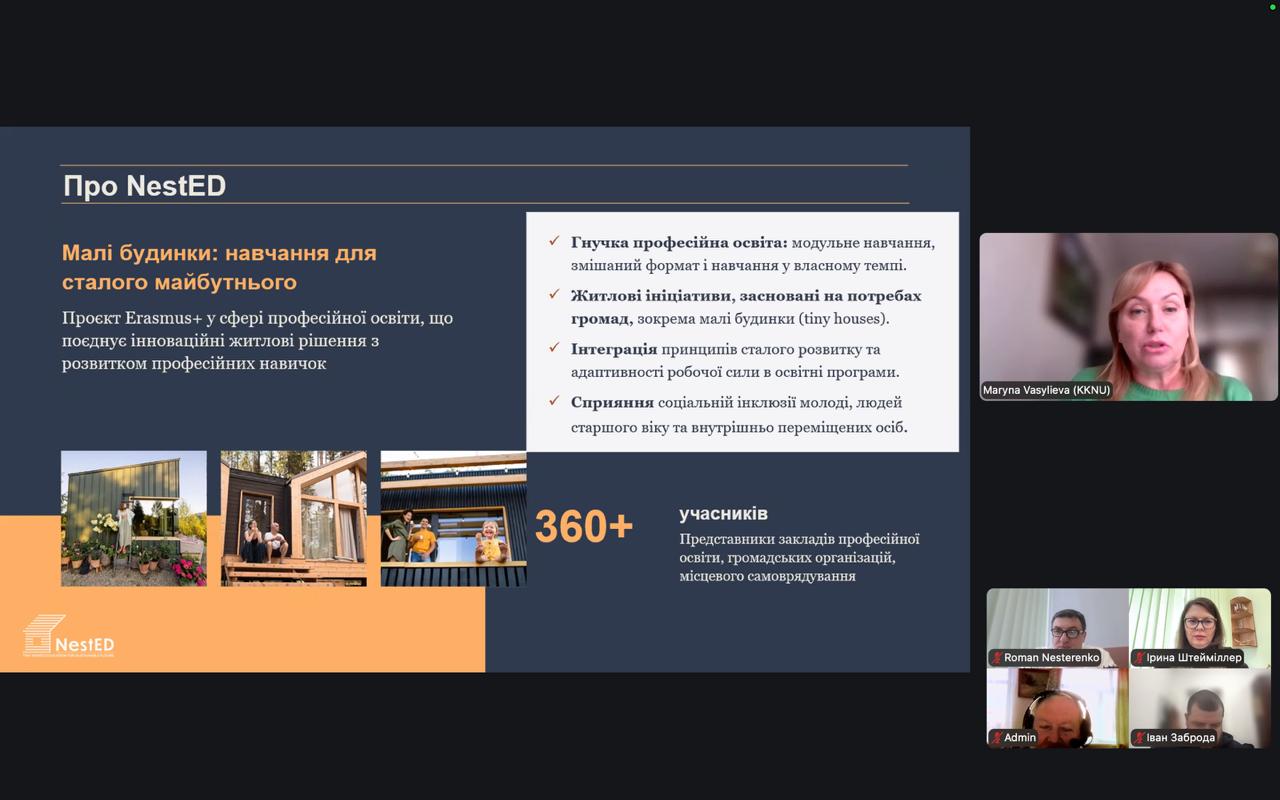
Particular attention was paid to the links between housing initiatives, the development of professional competencies, social inclusion, environmental sustainability and stronger local communities. Ukrainian examples included the CO-HATY initiative in Ivano-Frankivsk, UNBROKEN Social Housing in Lviv and a modular housing project in Chernivtsi. Participants also watched a video interview with Hennadii Korol, Head of the Blyzniuky Settlement Council. The interview explored how housing solutions are connected with the local economy, employment, and the restoration of a community's human potential.
The practical part of the workshop involved group work. Participants analysed specific housing case studies developed by European partners, identified the factors behind their success and discussed opportunities to adapt the proposed models to Ukrainian conditions. At the next stage, the groups developed their own ideas for addressing pressing community challenges. Particular attention was given to identifying target groups, potential partners, necessary resources, and the initial practical steps required to implement the proposed initiatives.
The workshop was moderated by representatives of the Karazin University team: Maryna Vasylieva, Doctor of Pedagogical Sciences, Professor and Deputy Director of the Ukrainian Engineering Pedagogics Academy Educational and Research Institute; Iryna Shtemiller, Candidate of Pedagogical Sciences, Associate Professor and Head of the International Relations Office; and Roman Nesterenko, Deputy Head of the International Relations Office and Coordinator of the UNESCO-UNEVOC Centre.
The workshop provided a platform for professional dialogue, experience sharing and the joint development of solutions that bring together sustainable housing construction, vocational education and community development.
The discussions confirmed the importance of cross-sectoral cooperation among educational institutions, local authorities, civil society organisations and other stakeholders in Ukraine's recovery and sustainable development. NestED (Tiny Homes Education for a Sustainable Future) is an Erasmus+ project co-funded by the European Union. It brings together vocational education, sustainable housing construction, social inclusion and community development.
The project team is developing educational materials and video case studies on affordable housing and ways to integrate this experience into professional training. Project website · NestED YouTube channel