Educators from Kharkiv Region Master Artificial Intelligence Tools in the Educational Process at Karazin University
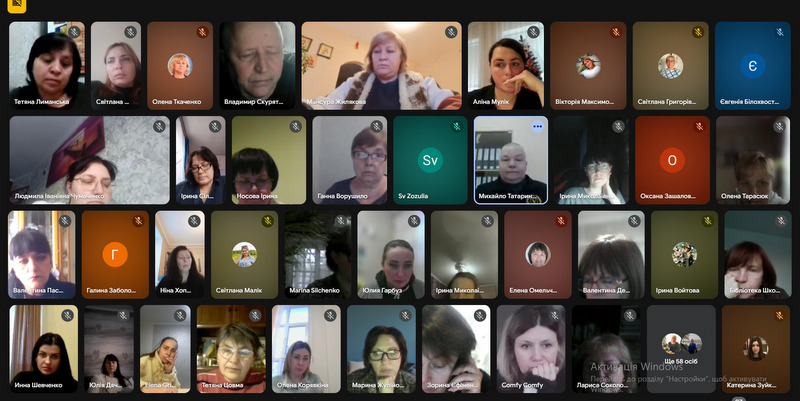
Starting on January 19, 2026, lecture-and-practical classes began at V. N. Karazin Kharkiv National University as part of advanced training courses under the program “Artificial Intelligence Tools in the Educational Process.” The program is implemented within the EURIDICE project under the EU Digital Europe Programme (DIGITAL).
More than 200 participants are taking part in the training, including preschool educators and methodologists, teachers of various subjects, club leaders, deputy principals for academic affairs, principals of preschool, primary and secondary education institutions, extracurricular education institutions, methodologists of professional development centers for educators, and representatives of local education management bodies. The participants represent educational institutions from the Bohodukhiv, Valky, Derhachi, Zlatopil, Merefa, and Chuhuiv city councils; the Vysochanske, Zolochiv, Pisochyn, Savyn, and Solonytsivka settlement councils; and the Vilkhivka and Natalyne rural councils of the Berestyn, Bohodukhiv, Izium, Lozova, Kharkiv, and Chuhuiv districts, as well as the Industrial, Nemyshlianskyi, Novobavarskyi, Osnovianskyi, Saltivskyi, Slobidskyi, and Kholodnohirskyi districts of the Kharkiv City Council.
The course curator is Olena Mykolenko, an expert of the National Agency for Higher Education Quality Assurance, coordinator of various Erasmus+ projects, and Associate Professor at the Education and Research Institute “Karazin Institute of International Relations and Travel Business.”
During the training, conducted by the developer of the educational program materials, Viktoriia Bolotova, Associate Professor at the Education and Research Institute of Sociology and Media Communications, participants master the full cycle of working with AI tools — from analytical and methodological preparation and searching for relevant sources to creating multimedia educational materials, developing assessment tools, and ensuring effective feedback.
A distinctive feature of the practical component of the course is its focus on prompt engineering as a key competence for effective interaction with generative artificial intelligence models. This approach enables educators and educational managers in the Kharkiv region to create high-quality, relevant, and methodologically sound educational content for working with pupils and students in their respective institutions, particularly in the context of the gradual implementation of the objectives of the New Ukrainian School program.
At the introductory session, Mykhailo Tatarynov, Director of the Institute of Continuing Education, welcomed the course participants, outlined the specifics of training for particular target groups, presented the content and scheduling features of the educational process for different groups, conducted safety briefings on the protection of life and health of non-formal education learners under martial law, and answered questions that were most relevant to educators, including options for organizing learning during power outages.
The educational process will continue until January 30, 2026, inclusive.
.png)
.jpg)
%20(1).jpg)


.png)