


Nobel Prize 2025: Apocalyptic Prose, Absurdism, and New Directions in World Literature
.jpg)
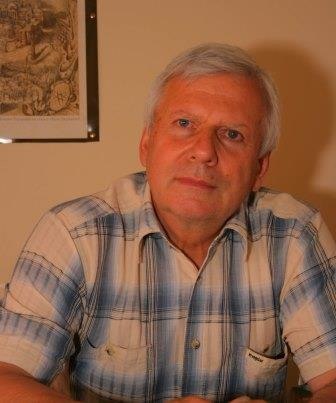
The 2025 Nobel Prize in Literature has drawn the attention of the literary community to the Hungarian writer László Krasznahorkai — an author often described as a successor to the Central European modernist tradition. His dystopian, metaphysically charged texts have once again placed at the forefront the questions of the limits of art, the experience of trauma, and the inner solitude of the individual in a world losing its sense of stability. We spoke with Yevheniia Chekareva, Dean of the School of Philology, about why Krasznahorkai became this year’s laureate, how the Nobel selection mechanism works, and what parallels can be drawn with Ukrainian literature.
Tell us, please, which author received this year’s Nobel Prize in Literature and why he was chosen.
In 2025, the Nobel Prize in Literature was awarded to Hungarian writer László Krasznahorkai. The Nobel Committee praised his “compelling and prophetic body of work that, amid apocalyptic dread, confirms the enduring power of art.” The jury emphasized that Krasznahorkai is “a major epic writer of the Central European tradition,” whose style is marked by “absurdism and grotesque excess.” These artistic qualities played a defining role in the committee’s decision.
What Makes the Nobel Prize in Literature Unique? What Criteria Are Used to Select the Laureate, and How Are These Qualities Reflected in the Works of László Krasznahorkai?
The Nobel Prize in Literature is awarded for an author’s significant contribution to world literature. Nominations are submitted by recognized experts: members of the Swedish Academy, professors of literature, former laureates, and heads of writers’ associations. During the selection process, the Nobel Committee reads the nominated works, compiles a shortlist, and then the Academy votes (the winner must receive more than half of the votes).
Krasznahorkai’s works are not light or entertaining reading — they are profound, complex, almost epic prose filled with philosophical reflections on the present and the future. He explores themes of apocalypse, destruction, isolation, and the crisis of civilization — issues painfully relevant today. Yet a deep belief in the power of art runs through his writing. The Nobel Committee explicitly noted that his work “confirms the power of art” even in the face of “apocalyptic horror.”
His artistic vision is reflected in a distinctive style: long, “wave-like” sentences with intricate syntax that create a rhythm reminiscent of meditation or stream of consciousness, reinforcing feelings of decline or transcendence.
How does contemporary literature enter the canon and become classical? Does the Nobel Prize contribute to this process?
Canon formation is a complex process shaped by time, academic recognition, translation, and influence on writers and readers. The Nobel Prize can indeed contribute significantly, as it provides a major international platform that attracts global attention, encourages translation, and stimulates scholarly interest.
However, not all Nobel-winning literature becomes canonical immediately. Some works remain little known for years until a “translation breakthrough” or broader academic engagement brings them to wider recognition.
Does Ukrainian literature share themes or imagery similar to those in Krasznahorkai’s works? In which Ukrainian writings can we trace trauma, post-totalitarian experience, or the search for meaning?
Krasznahorkai often engages with themes of social decline, isolation, civilization in crisis, and apocalyptic fear — echoes of totalitarian experience, though rendered more in metaphysical and psychological dimensions than in explicit historical form.
Ukrainian literature likewise contains many authors who explore trauma, post-totalitarian experience, collective memory, the search for identity and meaning. Among contemporary writers, one can mention Serhiy Zhadan, Hanna Kostenko, Olena Styazhkina, and Victoria Amelina, whose works address war, loss, social disintegration, and existential reflection.
Have Ukrainian readers previously had access to Krasznahorkai’s works? Which texts would you personally recommend?
As of today, none of László Krasznahorkai’s works have been published in Ukrainian. However, the publishing house Komora has announced plans to release a Ukrainian translation of The Melancholy of Resistance in 2025.
For now, readers can discover his major works in the original or in translations into other languages, including:
-
Satantango (1985)
-
The Melancholy of Resistance (1989)
-
War and War (1999)
-
Seiobo There Below (2008)
-
The Last Wolf (2009)
-
Baron Wenckheim’s Homecoming (2016)
-
Herscht 07769 (2021)
%20(1).png)

%20(1).jpg)
.jpg)
.png)
%20(1).jpg)
.png)