Science Under Wartime Conditions Is Critically Important: An Interview with Anton Panteleimonov, Vice-Rector for Research and Teaching at Karazin University
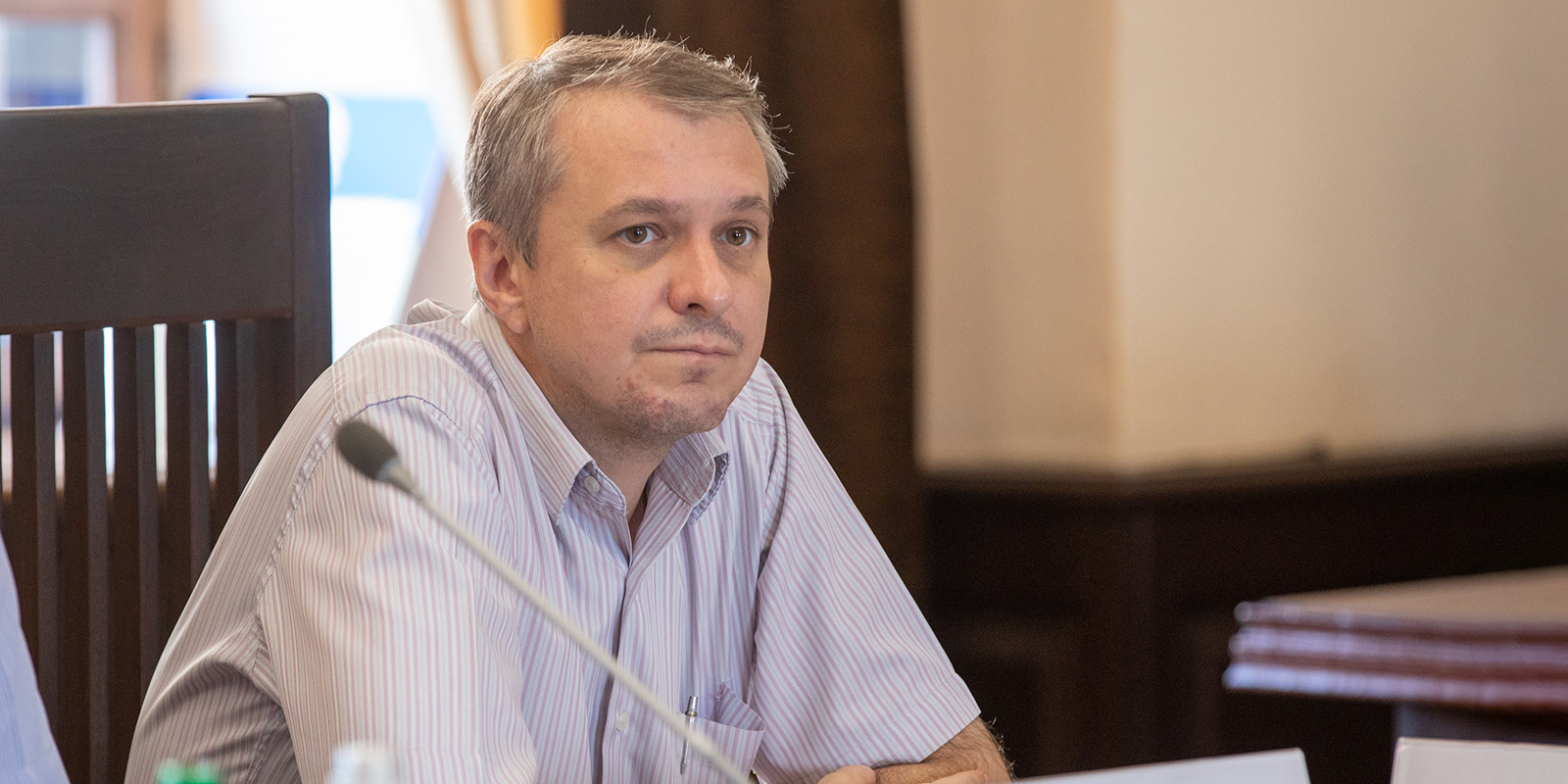
Anton Vitaliiovych, what key approach defined the University’s research agenda this year?
The main approach is very simple, yet difficult to implement: not to lose quality and not to stop development. In frontline Kharkiv, science becomes a form of resilience, responsibility, and contribution to the country’s future. That is why we have simultaneously preserved fundamental world-class research schools while significantly strengthening applied, defence-related, medical, and technological areas.
The University operates in a frontline city. How has this affected the organisation of research activities?
It means constant adaptation. It was crucial to create conditions in which a researcher does not have to worry every day about whether they will be able to work tomorrow. Science does not tolerate chaos. Our task as an administration was to minimise its impact.
Which research areas are currently key for Karazin University?
We work across a wide spectrum, but in terms of strategic priorities these include nuclear medicine, physics and astronomy, materials science, IT and artificial intelligence, information security, quantum technologies, as well as social sciences and humanities related to war, veterans, and human capital. Importantly, these areas do not exist in isolation — they intersect, creating interdisciplinary solutions.
The annual report contains many figures related to funding. What is the current funding model for research at the University?
We operate under a multi-channel funding model. The foundation is, of course, the state budget, but international grants, contract-based research, and projects of the National Research Foundation of Ukraine are no less important. In 2025, total R&D funding exceeded UAH 80 million, which is a sign of trust in the University at both national and international levels.
Karazin University is actively engaged in defence-related research. How do you define the balance between open science and security?
It is a very delicate balance. On the one hand, the University is a space for open science. On the other, we clearly understand our responsibility. That is why some projects have restricted access, while we still maintain academic quality, expertise, and a long-term perspective. In 2025, we carried out 14 dual-use R&D projects worth over UAH 13 million. This is a serious contribution to national security.
The University has successfully passed state attestation. What do these results mean to you?
Attestation is a snapshot of institutional maturity. We passed it in all declared areas and received high evaluations, including Group “A” status in social sciences and natural and mathematical sciences. For me, this confirms that even under wartime conditions, the University maintains systemic thinking, strong human capital, and strategic vision.
Karazin University consistently holds strong positions in Scopus. What is the secret behind such publication activity?
It is the result of decades of investment in research schools. In 2025, we recorded 764 publications indexed in Scopus, with a Hirsch index of 99. But it is not only about quantity — quality is growing as well: the share of Q1–Q2 publications is increasing, and the humanities and medical segments are expanding. We provide editorial and organisational support to authors, and this yields results.
The University is actively developing its own academic journals. Why is this important?
Having our own journals means sovereignty in scientific communication. Today, six of our journals hold Category “A” status and are indexed in Scopus. This means that Ukraine is not only consuming knowledge but also shaping the global scientific agenda.
One of the most notable infrastructure achievements was the launch of a solar power plant. Is this a symbol or a practical tool?
Both — but first and foremost, it is a practical tool for the survival of science. Laboratory equipment cannot wait for electricity to be restored. A decentralised energy system has given us autonomy, resource savings, and confidence in the future.
In 2025, the University’s Science Park officially began operations. What is its mission?
The Science Park is a bridge between ideas and the economy. Its mission is to commercialise research outcomes, support startups, and create scale-ups. We want science not to end with a report but to evolve into a product, a technology, or a business.
The University actively cooperates with the National Academy of Sciences of Ukraine. What does this synergy bring?
It combines academic depth with university-level mobility. Joint research, shared personnel, and infrastructure strengthen Ukrainian science as a whole, not just individual institutions.
Finally, what does it personally mean to you to serve as Vice-Rector for Research in 2025?
It is a daily responsibility and a great honour. When you see discoveries, publications, and startups emerging in Kharkiv under shelling, you realise that Ukrainian science is alive and developing. And that is truly inspiring.
.png)
%20(1).jpg)
%20(1).jpg)