


Karazin University Research Team Wins the Ministry of Education and Science Young Scientists Competition
A team of young researchers from the Education and Research Institute of Sociology and Media Communications of V. N. Karazin Kharkiv National University, led by Ruslan Zaporozhchenko, has won the Young Scientists Competition–2025 organized by the Ministry of Education and Science of Ukraine.
The project is titled “Synergy of Formal and Non-Formal Education to Prevent Human Capital Losses in Wartime.”
According to the results of expert evaluation, the project ranked among the top ten in Ukraine and became the only social and humanities project in the top ten. This achievement demonstrates not only the high academic quality of the research team’s work, but also the relevance and social significance of the chosen topic in the context of war.
The idea for the project emerged from the reality Ukrainians have been living in since the beginning of the full-scale invasion. The war has fundamentally transformed educational trajectories: students have changed countries and cities, lecturers have worked amid air raid alerts and blackouts, universities have lost physical classrooms while striving to maintain connections with students and faculty. At the same time, non-formal educational initiatives have been rapidly emerging and developing — including online courses, volunteer educational hubs, retraining programs, and psychological support initiatives.
A key challenge identified by the young researchers is the risk of losing not only educational infrastructure but also human capital, first and foremost knowledge, skills, motivation, and a sense of connection to education as a vital source of stability.
With the support of the Karazin University community, the project was submitted to the competition of the Ministry of Education and Science of Ukraine. Its successful implementation will be made possible through the combined efforts of the young research team from the Education and Research Institute of Sociology and Media Communications, who already have experience in international research projects focused on education.
Among them is the SMART-PL project within the Erasmus+ program, dedicated to personalized learning models, as well as the project “Education on Risk and Crisis Management for a Safer Ukraine,” supported by the Swedish Institute. The latter addressed educational and security risks in Ukraine and developed educational modules aimed at strengthening the capacity of educational institutions and communities to respond to crisis challenges and wartime conditions.
Realizing the scientific potential of Karazin University researchers remains one of the core directions of the University’s responsible and complex mission during the war.
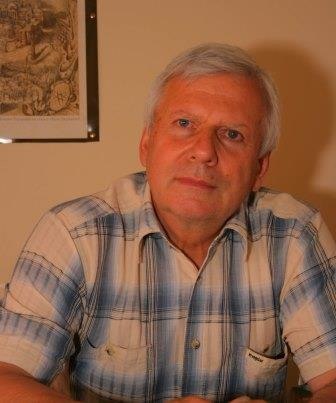
More details about the research idea, its practical value, and expected outcomes are provided in the commentary by the project leader, Ruslan Zaporozhchenko.
What do you consider the key scientific novelty of this project?
I believe the scientific novelty lies in changing the very way we think about education in wartime. We propose viewing formal and non-formal education not as competitors or parallel worlds, but as a single ecosystem of resilience.
The project goes beyond describing individual practices: we are developing a conceptual model of synergy, a typology of successful cases, and a system of indicators that make it possible not only to document existing experiences, but also to assess the effectiveness of this interaction and its reproducibility in different contexts.
Importantly, we include in our analysis not only formal educational outcomes but also broader social and psychological factors, such as motivation to learn, adaptability, resilience of educational communities, and levels of mutual support. This allows us to see education as a living social process rather than merely an institutional procedure.
Ultimately, education emerges not simply as a mechanism for knowledge transmission or obtaining diplomas, but as a strategic resource for preserving and restoring human capital, functioning even under wartime crisis conditions and laying the groundwork for Ukraine’s post-war recovery.
Why do you consider the combination of formal and non-formal education an effective tool for preserving human capital during wartime?
Because war destroys linear and predictable life scenarios. On the one hand, formal education provides structure, legitimacy, trust, and a long-term perspective — elements that represent stability in a person’s life. On the other hand, non-formal education offers speed, flexibility, and the ability to respond immediately to emerging needs.
When these systems operate separately, their potential is limited. When they are combined, it becomes possible to maintain continuity of learning even in the most difficult conditions: recognizing non-formal learning outcomes, reintegrating individuals into formal educational pathways, and sustaining motivation and a sense of purpose.
Such synergy also allows education to fulfill a broader social function — reducing feelings of disorientation and isolation often experienced during war, and creating a sense of continuity of life despite disruption. In this combination, education becomes not just an institution, but a space of support, community, and belief in the future — which we consider critically important for preserving human capital during and after the war.
Which social groups or communities are the main focus of your research?
The research focuses on social groups whose educational trajectories have been most disrupted or transformed by the war. First and foremost, these include upper secondary school students and university students who were forced to interrupt their studies, change institutions, learning formats, or countries. For many of them, education has shifted from a continuous process to a fragmented experience constantly disrupted by external circumstances.
Special attention is also given to lecturers and university staff, who during the war not only sustain the educational process but often take on additional roles — mentors, coordinators, crisis managers, and volunteers. Their experience is crucial for understanding how formal education adapts to extreme conditions and where the limits of its resilience lie.
We also work with organizers of non-formal educational initiatives — volunteer hubs, online platforms, retraining programs, and psychological support initiatives — as they are often the first to respond to new educational demands of society.
It is therefore essential that the project does not speak about these groups abstractly, but rather amplifies their voices directly, seeking to understand the barriers they face, the practices that help them remain engaged in education, and the factors that sustain learning motivation amid constant uncertainty and stress.
How can the research results be used by universities, communities, or government institutions?
We aim for the project to serve as a bridge between research and practice. It is not merely about describing the situation, but about helping establish strong and sustainable connections between formal and non-formal education actors.
For universities, the results may form the basis for implementing flexible educational pathways, recognizing non-formal learning outcomes, and building partnerships with civic initiatives and online platforms. For communities and educational hubs, the findings provide a means of legitimizing their experience and making their voices heard at the level of educational policy. For government institutions, the project offers an analytical foundation and clear recommendations on how to minimize human capital losses and invest in its recovery through education.
More broadly, the project’s outcomes can help make education in Ukraine more resilient, inclusive, and humane, even in the most difficult times — times that we will overcome together and in which we will rebuild our country.
The successful launch of the project once again confirms that young scholars of Karazin University not only shape the academic landscape, but also actively contribute to addressing pressing societal challenges. The combination of in-depth scientific analysis with a strong focus on practical outcomes makes such initiatives especially valuable for the future of Ukraine.
%20(1).png)
%20(1).jpg)
.jpg)
.png)
%20(1).jpg)
.png)